

Have you ever wondered what kinds of tomatoes ancient peoples ate and what they tasted like? The answer is that their flavour was far removed from that of supermarket tomatoes.
In this article, we explore five of the world’s oldest tomato varieties, along with five traditional Bulgarian varieties.
🌍 5 of the world’s oldest tomato varieties
Tomatoes originated in South America, where they were first cultivated as early as around 500 BC.
Tomatoes did not reach Europe until the middle of the 16th century, around 1540, when Spanish seafarers brought them across the Atlantic.
Interestingly, some of the earliest varieties have survived with their characteristics preserved to this day.
-
- Red Calabash – 1553: One of the oldest documented and preserved varieties in history. It was especially popular in the gardens of early American settlers. Evidence of its existence also appears in a 1793 still life by the renowned American painter Raphaelle Peale. Its fruit is deeply ribbed and flattened, with an intense fruity flavour and high sugar content.
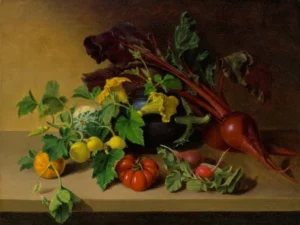

- Red Calabash – 1553: One of the oldest documented and preserved varieties in history. It was especially popular in the gardens of early American settlers. Evidence of its existence also appears in a 1793 still life by the renowned American painter Raphaelle Peale. Its fruit is deeply ribbed and flattened, with an intense fruity flavour and high sugar content.
-
Polish Linguisa – 1800: A documented heirloom variety brought to New York State by a Polish immigrant in the late 19th century. It produces very large, elongated fruit weighing up to 300 g and resembling a sausage or pepper. The flesh is exceptionally dense, substantial and sweet, with very few seeds and little water content, making it excellent for thick sauces and lyutenitsa.

-
Cherokee Purple – 1820: This variety’s history was formally recorded thanks to Craig LeHoullier, a noted American heirloom-tomato expert. In 1990, he received the seed from J. D. Green, whose family had obtained it directly from members of the Cherokee people, who had grown it since the early 19th century. It is distinguished by its dark purple colour, buttery texture and rich flavour.

-
German Johnson Pink – 1820: A traditional variety preserved for generations by farming communities in America. Its genetic origins have been traced to old seed brought from Bavaria by German immigrants. It is historically recognised as one of the direct genetic ancestors of another legendary variety, Mortgage Lifter. It produces large, deep-pink tomatoes with a creamy texture and a very mild, sweet flavour with low acidity.

-
1884 – 1884: A farmer found it in deposits left by the Ohio River after a major flood in 1884. The surviving plant produced fruit from which this stable variety was established. Its pink-red fruit is fleshy and enormous, approaching one kilogram, with a classic balance of sweetness and mildness.
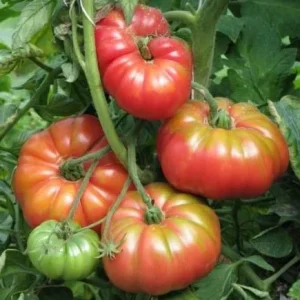
Browse all BalkanSort heirloom varieties
When did tomatoes arrive in Bulgaria?
Tomatoes began to be grown widely in Bulgaria only in the late 19th century, after the country’s liberation. They were introduced and popularised by the renowned Bulgarian market gardeners who travelled and worked throughout Austria-Hungary and other European countries.
Why are old Bulgarian tomato varieties so flavourful?
The story of tomatoes in Bulgaria resembles that of the Bulgarian oil-bearing rose, whose qualities are renowned around the world.
The oil-bearing rose (Rosa damascena) originated in the Middle East, around Damascus, but in the Kazanlak Valley it found the particular climate that enables it to produce exceptionally rich, high-quality essential oil.

Much the same happened with tomatoes. Although they came from the Americas, in Bulgaria they found an ideal terroir: the combined influence of climate, soil and terrain. Here they developed their full character.
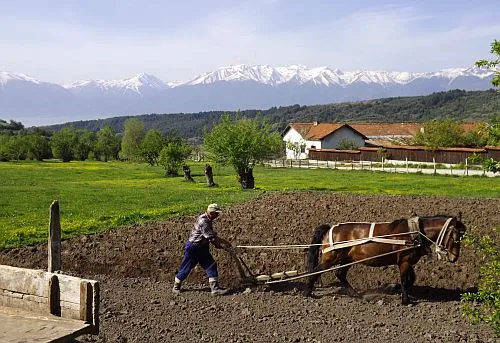
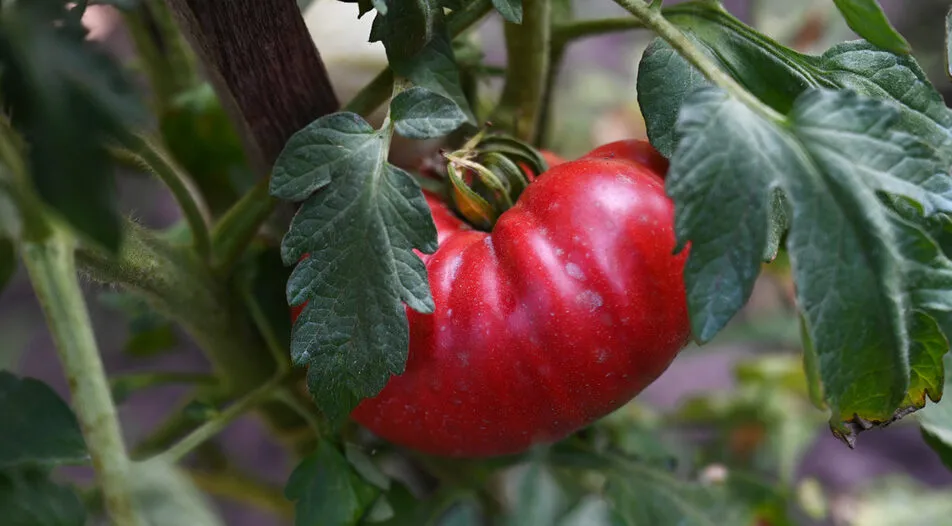
Over the decades, local Bulgarian tomato varieties developed flavour qualities that are difficult to reproduce elsewhere. Three main factors contribute to this:
-
Ideal temperature variation: Bulgarian summers offer a distinctive combination of plentiful hot, sunny days and relatively cool nights. Strong daytime sunshine encourages the plant to produce large amounts of sugars and aromatic compounds. Cooler nights slow its metabolism, allowing these elements to concentrate and accumulate in the fruit instead of being consumed. This daily temperature range creates a fine balance between sweetness and refreshing acidity.
-
Rich soils: Bulgarian soils are rich in minerals and organic matter. The roots absorb these trace elements, which directly influence the tomato’s chemical composition and give it a full, deep flavour.
-
Selection: For generations, Bulgarians selected their most flavourful, vigorous and healthy tomatoes.

5 old Bulgarian varieties worth growing
-
Ideal Tomato (1952): The most popular old Bulgarian variety, established over time because of its excellent flavour. Its round, fleshy, crack-resistant fruit weighs 180–210 g and has thin skin. It is an emblem of the traditional Bulgarian salad.

-
Bulgarian Triumph (1960): An old family variety that earned international recognition and was included in the 1999 American reference book 100 Heirloom Tomatoes for the American Garden. It forms attractive trusses of round, crack-resistant fruit weighing 60–170 g. Its flavour is intensely sweet and rich.

-
Haskovski Mesten (1955): A traditional variety from the Thracian Plain, well adapted to summer heat. The sunny climate gives it naturally high sugar levels and pleasant freshness. Its fruit is large, fleshy and juicy, with the authentic flavour of village gardens from years gone by.

-
Baba Danka (1930): An heirloom from the Veliki Preslav area, adapted to contrasting semi-mountain temperatures. It produces large, fleshy and juicy pink tomatoes with thin skin. Its harmonious flavour has the fresh acidic note typical of old Bulgarian open-pollinated varieties.

-
Selo Podem (1940): An authentic variety from the Pleven region, reflecting the character of the Danubian Plain’s rich soils. Its 150–200 g fruit has a dense, almost buttery texture. The flavour offers an old-fashioned sweet-and-sour balance with a lingering finish.

Browse our collection of traditional Bulgarian tomatoes.
Growing heirloom varieties: points to consider
Heirloom varieties from around the world can be considerably more demanding than hybrids. Depending on their place of origin and the local climate to which they are accustomed, they may need more water, tolerate drought or waterlogged soil poorly, or require richer soil. The opposite may also be true: some are adapted to these very conditions and thrive in them.
- Support and side-shoot removal: Most are tall-growing, indeterminate plants. They need sturdy stakes and regular removal of side shoots.

- Mulching: Covering the soil with straw or another mulch keeps moisture even, helps prevent fruit from cracking and stops leaves from touching soil-borne pathogens.

- Careful watering: Abrupt changes from dry conditions to overwatering are harmful and can cause cracking or blossom-end rot. Drip irrigation is especially useful in this situation.
Conclusion
Tell us about your favourite tomato varieties in the comments! 🙂
0 comments